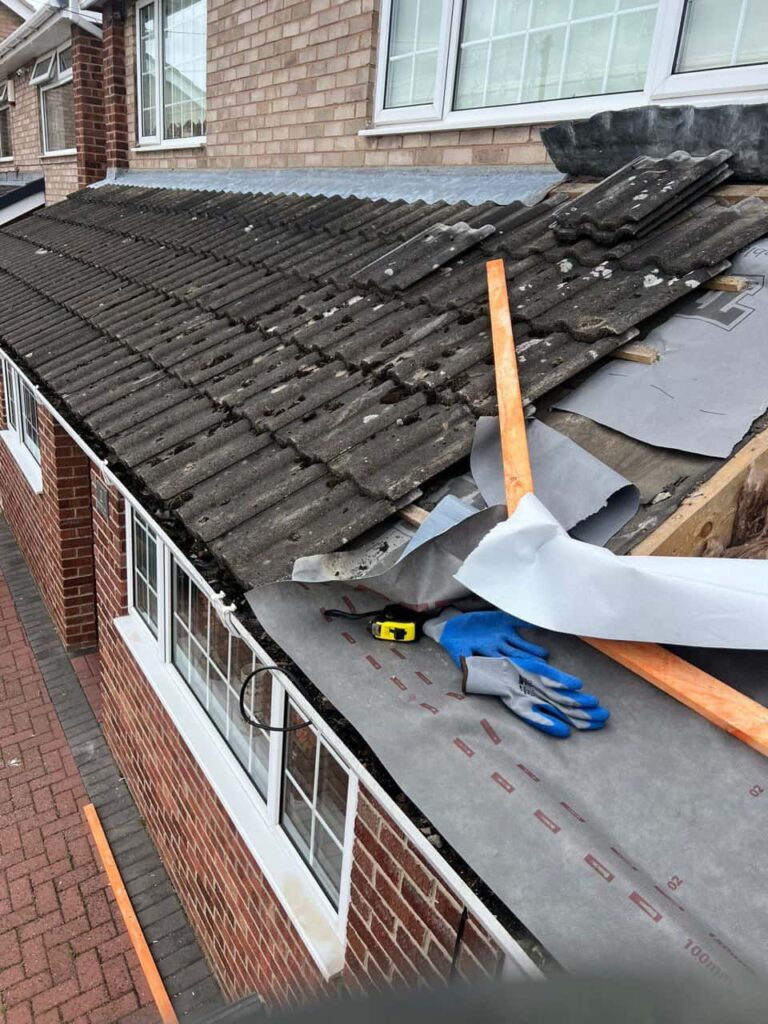
When a roofing problem appears, one of the first questions homeowners often face is whether the affected area can be repaired or whether the roof has reached the stage where replacement should be considered. A leak, damaged tiles or visible weathering may raise concerns, but no single symptom necessarily provides the complete answer.
The most useful starting point is the overall condition of the roof. A fundamentally sound roofing system with one isolated defect is very different from a roof experiencing deterioration across several areas at once.
For homeowners in Molescroft, East Riding of Yorkshire, a professional roof assessment can establish whether targeted repairs remain a dependable solution or whether deterioration has become extensive enough for replacement to make more practical sense. At TRP Roofing Molescroft, we focus on identifying the condition and cause of roofing problems before recommending the appropriate work.
Why the Whole Roof Matters More Than One Visible Problem
Roofing systems contain multiple components working together to keep the property protected.
The tiles or slates are the most visible part, but the roof also relies on underlay, battens, fixings, flashing, junctions and supporting structural components.
A defect in one area does not necessarily mean that everything needs renewing.
The key question is whether the problem is:
- Isolated to one component
- Confined to a small area
- Part of repeated deterioration
- Developing across several sections
- Connected to problems beneath the roof covering
Understanding this distinction is central to deciding between repair and replacement.
When Is Roof Repair Usually Appropriate?
Professional repairs can be highly effective when the majority of the roof remains serviceable.
A Small Number of Damaged Tiles
Individual cracked, slipped or missing tiles can often be replaced without disturbing a sound surrounding roof.
The important point is to check why the damage occurred and whether neighbouring tiles and their supporting components remain secure.
Localised Flashing Deterioration
Flashing protects vulnerable roof junctions and transitions.
Where deterioration is confined to one particular section and the surrounding roofing materials remain in satisfactory condition, targeted flashing work may provide an effective solution.
A Clearly Identifiable Leak
Not every roof leak indicates widespread failure.
Water ingress can originate from a relatively small defect. Once the true entry point has been identified, repairing that area may restore effective weather protection.
Limited Weather Damage
Adverse weather can sometimes affect individual roof components while leaving the wider roofing system sound.
Where damage remains localised, professional repair may be entirely appropriate.
Roof Age Should Not Make the Decision on Its Own
An older roof does not automatically require replacement.
Roofing materials age at different rates depending on their type, installation, exposure and maintenance history.
Some older roofs remain fundamentally sound despite visible weathering. Others may experience significant deterioration sooner because several components have begun failing.
Rather than asking only how old the roof is, consider:
- How frequently it requires repairs
- Whether leaks repeatedly return
- How much of the covering remains serviceable
- Whether underlying materials are sound
- Whether the roofline remains stable
- How widespread deterioration has become
Condition provides a much clearer picture than age alone.
When Does Replacement Become More Appropriate?
Replacement becomes a stronger consideration when deterioration is no longer confined to individual defects.
Widespread Tile or Slate Failure
Replacing one damaged tile is very different from repairing a roof where large numbers of tiles are becoming brittle, cracked or loose.
If surrounding roofing materials are deteriorating at a similar rate, new defects may continue appearing even after individual repairs are completed.
Recurring Leaks in Different Areas
A single leak can often be traced to one defect.
Multiple leaks developing across different roof sections can indicate more general deterioration affecting the roof’s ability to resist water.
Extensive Underlay Deterioration
Underlay provides secondary protection beneath tiles or slates.
Localised damage may sometimes be addressed during repair work. Where the underlay has deteriorated extensively, however, accessing and renewing it can require much broader roofing work.
Deteriorated Battens
Battens support tiles and provide fixing points across the roof.
If deterioration is confined to a small accessible section, local replacement may be possible. If battens have deteriorated throughout substantial areas, the problem becomes more significant.
Look at the Pattern of Previous Repairs
A roof’s repair history can reveal a great deal about its overall condition.
Occasional maintenance over many years is normal. Increasingly frequent repairs are different.
Ask Whether:
- The same defects keep returning
- New sections continually require attention
- Leaks are appearing in different places
- More tiles are becoming damaged
- Previous repairs are surrounded by new deterioration
- Problems are developing more quickly than before
A pattern of escalating defects may indicate that the roofing system is reaching a stage where local repairs provide diminishing benefits.
Why Recurring Repairs Need Investigation
Repeatedly repairing visible symptoms without investigating their underlying cause can create a cycle of temporary fixes.
For example, if tiles continually slip, the problem may involve more than the tiles themselves. Fixings or battens could also require attention.
Similarly, an internal damp patch may not sit directly beneath the external point where water is entering.
Effective roofing work begins with diagnosis.
Check the Condition Beneath the Visible Surface
A roof can look reasonably serviceable from ground level while deterioration exists underneath.
This is particularly important when deciding between repair and replacement.
Underlying Problems Can Include:
- Deteriorated underlay
- Damaged battens
- Moisture-affected timber
- Weak fixing points
- Hidden deterioration around previous repairs
- Water travelling through concealed roof areas
The extent of these problems can significantly influence the appropriate solution.
Changes to the Roofline Deserve Particular Attention
Visible movement or distortion should never be treated as ordinary surface wear.
Signs may include:
- Sagging
- Dips
- Uneven roof sections
- Changes along the ridge
- Noticeable distortion
These symptoms can indicate that the issue extends beyond individual tiles or slates.
A professional assessment is particularly important because surface repairs alone cannot correct an underlying structural problem.
Several Small Problems Can Add Up to One Larger Issue
Sometimes no individual defect seems severe enough to justify replacement.
However, the combined condition of the roof may tell a different story.
Consider a roof with deteriorated flashing, numerous fragile tiles, ageing underlay and recurring leaks. Each issue might appear repairable when considered separately, but collectively they may demonstrate that the roofing system is deteriorating throughout.
This is why the overall condition should always guide the decision.
Repairing a Sound Roof Is Valuable
Replacement should not be treated as the automatic solution to every roofing concern.
Where the main roof remains in good condition, targeted repairs can preserve existing materials and restore dependable performance.
Professional assessment helps ensure that serviceable roofing components are not unnecessarily disturbed simply because one area requires attention.
Equally, Do Not Keep Repairing a Roof That Is Failing Throughout
The opposite approach can also create problems.
If defects are becoming widespread and different components continually fail, repeatedly concentrating on the latest visible issue may not address the roof’s declining overall condition.
The objective should be to identify the point at which localised repairs stop providing a dependable solution.
What Should a Professional Roof Assessment Examine?
A proper assessment should consider more than the most obvious defect.
Key Areas Include:
- The condition of tiles or slates.
- The location and extent of leaks.
- Flashing and roof junctions.
- Ridge and verge areas.
- Accessible underlay and battens.
- Signs of moisture penetration.
- Previous repair areas.
- The stability of the roofline.
- The distribution of deterioration.
Together, these observations provide a much clearer understanding of how the complete roof is performing.
Signs That Repairs May Still Be the Right Approach
Repair is generally more promising where:
- The defect has a clear local cause
- Surrounding materials remain sound
- The roof structure is stable
- Water ingress is confined to one area
- Most of the covering remains serviceable
- Previous repairs have performed reliably
- Underlying deterioration is limited
In these circumstances, professional repair can often restore the affected area without requiring wider replacement.
Signs That Replacement Deserves Consideration
A more comprehensive approach may be appropriate where:
- Roofing materials are failing across large areas
- Leaks repeatedly develop in different locations
- Underlay deterioration is extensive
- Supporting components require widespread attention
- Roofline movement is evident
- Repairs are becoming increasingly frequent
- Several major roofing components are deteriorating together
No single sign should necessarily determine the decision. It is the combined condition of the roofing system that matters.
Why Early Assessment Gives You More Options
Waiting until roofing problems become severe can allow localised deterioration to spread.
Water entering through one vulnerable area may eventually affect materials beneath and around the original defect.
Early professional assessment provides an opportunity to understand the problem while it may still be manageable through targeted work.
It can also identify when broader deterioration has reached the point where continuing with isolated repairs is unlikely to provide a reliable result.
Professional Roof Repairs and Replacement in Molescroft
For homeowners in Molescroft, East Riding of Yorkshire, deciding between repair and replacement should begin with an accurate understanding of the existing roof.
At TRP Roofing Molescroft, we assess roofing systems carefully to determine the extent of deterioration and identify the underlying cause of visible problems.
Where a professional repair remains suitable, targeted work can help preserve a sound existing roof. Where deterioration has become widespread, a more comprehensive roofing solution can address the system as a whole.
The focus should always be on carrying out the work the roof genuinely requires.
Conclusion
When deciding whether to repair or replace your roof, start with its overall condition rather than focusing solely on its age or the latest visible defect.
An isolated leak, slipped tile or localised flashing problem can often be professionally repaired when the surrounding roofing system remains sound. Replacement becomes more appropriate when deterioration is widespread, leaks continually return, underlying materials are failing or several roofing components require significant attention at the same time.
A professional assessment provides the clearest way to distinguish between these situations.
If your roof in Molescroft, East Riding of Yorkshire is showing signs of deterioration, TRP Roofing Molescroft can assess its overall condition and recommend an appropriate solution based on what the roofing system actually requires.
Call us on: 01482 420 398
Click here to find out more about TRP Roofing Molescroft
Click here to complete our contact form and see how we can help with your roofing needs.