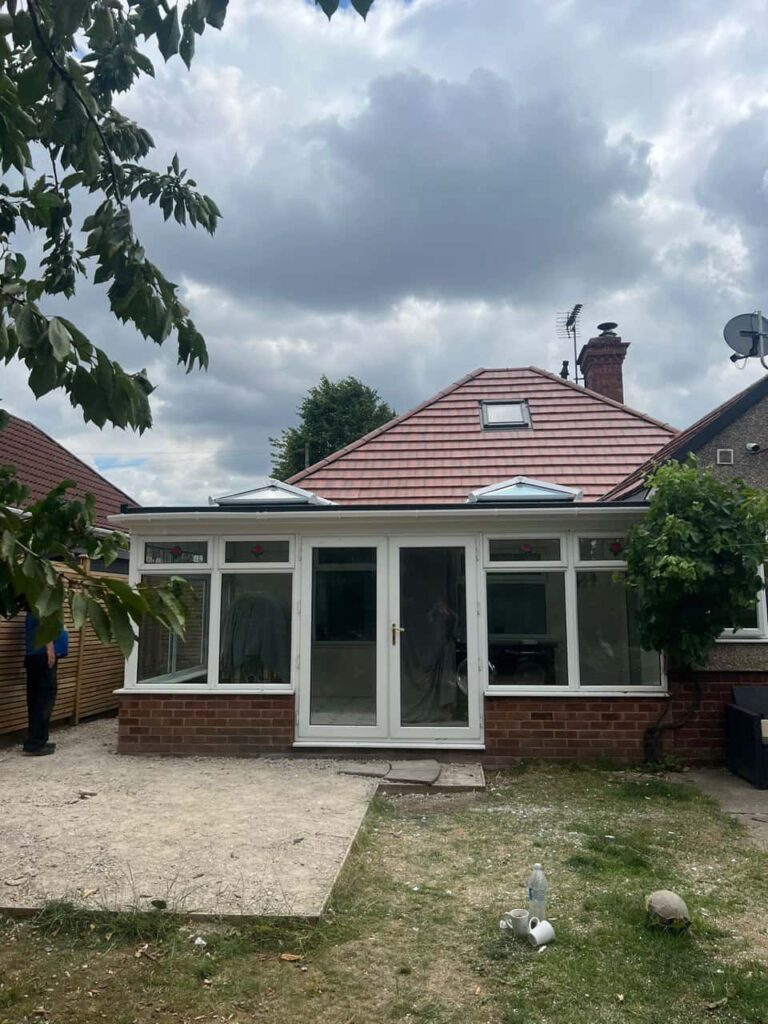
A roof replacement involves much more than taking off the existing tiles or slates and immediately laying new ones. The period between removal and installation is when the underlying structure becomes fully visible, allowing its condition to be assessed and prepared correctly.
This stage is essential because the performance of a new roof depends on the materials beneath its finished surface. Careful inspection, repairs and preparation help ensure that the new covering has a stable, correctly detailed foundation.
The Essential Work Beneath a New Roof Covering
Once the old roof is removed, the roofing contractor can identify defects that were previously concealed. The exact process varies according to the roof’s construction and condition, but several key stages are normally required before the new covering can be installed.
The Existing Roof Is Removed in a Controlled Sequence
Old tiles, slates, battens, underlay and defective roof details are removed methodically. The roof may be stripped in manageable sections so that exposure can be controlled and work can progress efficiently.
Materials are taken down carefully to avoid unnecessary disturbance to the roof structure and surrounding property. Removing the old covering also provides access to junctions, valleys, ridges and other areas that cannot be assessed properly from the surface alone.
Temporary Weather Protection Is Maintained
Once part of the roof has been opened, the property must remain protected from changing weather. The work is planned around suitable conditions, and temporary coverings can be used where the roof cannot be made weatherproof immediately.
Materials and open sections must be managed so that rain does not enter the roof space. This is particularly important when replacement involves several stages or unexpected defects require additional preparation.
The Roof Structure Is Inspected
With the covering removed, rafters, roof decking and other supporting components can be examined directly. This reveals whether they remain stable and suitable for the new installation.
The inspection may identify:
- Damp or decayed timber
- Split or weakened rafters
- Uneven roof planes
- Damaged roof decking
- Movement around joints
- Previous unsuitable repairs
- Deterioration near chimneys or valleys
- Areas affected by long-term water ingress
Discovering these problems before the new roof is fitted allows them to be addressed rather than concealed beneath fresh materials.
Damaged Supporting Materials Are Repaired
Any defective timber or decking that could affect the new roof must receive appropriate attention. The extent of this work depends on whether deterioration is limited to a small area or spread across a larger section.
The objective is to create a sound and even base. Installing new roofing materials over damaged or unstable support can lead to movement, poor alignment and further defects.
The Roof Plane Is Checked and Prepared
The roof surface needs to be sufficiently straight and consistent for the underlay, battens and covering to sit correctly. Irregular areas may require adjustment before installation continues.
This stage affects more than appearance. An uneven base can interfere with tile alignment, laps and the way rainwater travels down the roof. Correct preparation helps the completed covering function as one coordinated system.
Ventilation and Insulation Areas Are Assessed
Removing the old covering can provide an opportunity to inspect accessible insulation and ventilation arrangements. Wet, displaced or uneven insulation may indicate previous water entry or reduce the roof space’s performance.
Airflow routes should remain clear, and new roof components must be installed without unintentionally obstructing ventilation points. These details help manage moisture within the roof space after the replacement is complete.
New Underlay Is Installed
Roofing underlay forms a secondary protective layer beneath tiles or slates. It helps manage any wind-driven rain or moisture that passes the outer covering and directs it towards the eaves.
The underlay must be laid with correct laps, fixings and detailing around penetrations and junctions. Poorly formed overlaps or unsupported sections can weaken the performance of the roof system.
Battens Are Measured and Fixed
Battens support the tiles or slates and determine their spacing. They must be correctly positioned so that each course has the required headlap and alignment.
Accurate setting-out is essential. Incorrect spacing can leave the finished covering poorly aligned or reduce its ability to shed water effectively. Battens must also be securely fixed to the supporting structure.
Valleys, Flashings and Junctions Are Prepared
Some of the most important work takes place around areas where roof surfaces meet. Valleys, chimneys, walls, roof windows and other penetrations require carefully formed weatherproof details.
These components may be prepared or renewed before the main covering is installed. Completing them in the correct sequence allows tiles or slates to integrate neatly with the surrounding flashings and water channels.
The Roof Is Set Out Before Covering Begins
Before new tiles or slates are fixed, the contractor plans their layout across the roof. This includes establishing course positions, checking margins and considering how the covering will meet ridges, verges, valleys and penetrations.
Careful setting-out helps avoid narrow cuts, irregular rows and poorly aligned details. It also supports an even finish across the whole roof slope.
Why This Preparation Should Not Be Rushed
Once the new covering is installed, the supporting layers become concealed again. Skipping inspections or leaving defects unresolved can undermine the replacement roof from the outset.
The preparation stage ensures that:
- The structure is stable
- Damaged materials have been addressed
- The roof plane is correctly formed
- Underlay and battens are properly positioned
- Junctions are prepared for weatherproofing
- The new covering can be installed consistently
This work may be less visible than the finished tiles or slates, but it is fundamental to the roof’s performance.
Conclusion
Between removing an old roof and installing a new one, the structure is inspected, defective materials are repaired and the entire surface is prepared for the replacement covering. New underlay, battens and weatherproof junctions are then installed in a controlled sequence.
TRP Roofing Molescroft provides professional roof replacement services in Molescroft, East Riding of Yorkshire. If your roof is approaching the stage where replacement may be necessary, contact our team to arrange an assessment and discuss the most appropriate next step.
Call us on: 01482 420 398
Click here to find out more about TRP Roofing Molescroft
Click here to complete our contact form and see how we can help with your roofing needs.